
The AI Waiting Room: UAE Patients Are Choosing Clinics Inside ChatGPT Before They Book
A Titan Digital UAE Field Study and Framework
The 2026 Edelman Trust Barometer found that 59 percent of UAE residents now use AI to manage their health. Patients arrive already shortlisted, already informed, and already biased toward the brands the AI cited. Most clinics do not appear.
Original UAE research. Built for MOHAP, DHA, and DOH compliance.
The AI Waiting Room is the environment inside ChatGPT, Gemini, Perplexity, and Google AI Overviews where UAE patients research symptoms and shortlist clinics before any human contact. Clinics not cited here never enter the consideration set.
The 2026 Edelman Trust Barometer Special Report on Trust and Health ranked the UAE first among 16 countries for confidence in making informed health decisions. Patients trust their doctor, trust their regulators, and now trust AI as the first voice they consult. The clinic the AI cites wins the consultation.
The patient journey has already moved
The first consultation in UAE healthcare does not happen in your reception. It happens inside an AI tool, and most clinics are not in the room.
ChatGPT serves over 230 million health prompts per week. OpenAI's healthcare product line launched in January 2026 with ChatGPT Health, letting patients import medical records into the chat. Google moved in parallel: Search Engine Journal data from December 2025 records AI Overviews on 88 percent of healthcare queries. Two AI platforms now stand between the patient and the clinic.
Where does the new patient journey actually start?
It starts with a question typed into ChatGPT, Gemini, or Google's AI Overview, before any clinic website is opened. By the time the patient reaches a site, the brand has already been short-listed or rejected.
What does the AI already know about your clinic?
Whatever your site, your Google Business Profile, and third-party directories tell it. A clinic with a beautiful homepage but no schema, no named doctors, and no treatment pages is not legible. AI skips it because there is nothing to cite.
Why is the UAE moving faster than the world average?
High smartphone penetration, a digitally fluent expat majority, bilingual content access, and comfort with government digital services like UAE PASS and TAMM. These conditions produce a patient who uses AI like any other utility.
The Titan UAE field study: who AI cites and who it ignores
We tested five high-intent patient queries across UAE specialties. Each AI answer was a shortlist of seven to ten named clinics. Outside that shortlist, the clinic does not exist for that patient.
Five patient queries through AI search: dental implants in Ras Al Khaimah, dermatology for acne in Dubai, physiotherapy for back pain in Sharjah and Ajman, IVF in Dubai, and pediatrics in Ras Al Khaimah. For each we recorded which pages surfaced, what patterns they shared, and which segments were absent.
Hospital groups carry the AI default
RAK Hospital, Saudi German, Aster, NMC, and King's College Hospital London Dubai appeared repeatedly. Their pages include named doctors, treatment lists, schema, and FAQs. Scale alone does not earn citation. Architecture does.
Directories now eat the middle of the shortlist
Practo, Okadoc, Sehalife, HealthFinder, and PropertyFinder took two to four citation slots per query. From the AI's view, patient-facing aggregators are indistinguishable from the clinics.
AI-native directories are emerging fast
Zavis.ai surfaced in three of five queries with auto-generated city-specialty pages citing DHA and MOHAP licensing, insurance networks, and neighbourhood filters. Clinics not listed lose ground every week.
Optimised small clinics do appear
Julphar Dental in RAK, Tajmeels and Glamorous in Dubai dermatology, Al Resalah in Sharjah, and Conceive IVF in Dubai surfaced repeatedly. None are hospital groups. They share specific page traits any clinic can replicate.
Roughly 99 percent of UAE clinics are invisible
The UAE has around 5,000 clinic and specialist facilities, with Dubai alone licensing 5,800 in 2025. AI answers cite seven to ten per query. The vast majority never enter the new patient journey.
The seven signals AI engines look for inside a clinic website
After fifty plus cited pages across five queries, a pattern emerged. The clinics AI selects share specific page-level traits any smaller clinic can audit and rebuild. The full SEO, AEO, and GEO visibility pyramid explains why each signal matters.
Does the page title answer the patient's question?
Cited pages had titles matching the patient query as a sentence. "Best dental clinic in Ras Al Khaimah" works. "Welcome to Our Smile Care Family" does not.
Are doctors named with formal credentials?
Cited clinics list each doctor by name with MBBS, MRCP, board certification, country of training, and years of experience. Anonymous "our doctors" pages are invisible.
Is there a structured FAQ block?
Eight to twelve questions per service page, each with a forty to eighty word self-contained answer, marked up with FAQPage schema. The FAQ is where AI extracts the sentences that become the cited answer.
Do treatment pages list AED prices?
IVF pages cited specific AED 25,000 to AED 35,000 ranges. Dermatology pages quoted AED 499 to AED 2,999 packages. Specific numbers earn citations. "Competitive pricing" wins nothing.
Are services described as facts, not feelings?
Cited content reads like a regulator filing, not a brochure. Each sentence is a standalone citable fact. "Diagnostic ultrasound, ICSI, embryo culture, and PGT-A screening" is citable. "Compassionate care" is not.
Is regulator licensing visible?
The MOHAP, DHA, or DOH licence number and the Medical Director's name appear inside body content. AI treats regulatory visibility as a trust signal, and DHA standard DHA/HRS/HPSD/ST-21 requires it.
Is the schema clean and complete?
MedicalClinic or MedicalBusiness, Physician schema per doctor, FAQPage, BreadcrumbList, and Organization with full PostalAddress, all in a single @graph array. One clean graph wins over disconnected JSON-LD blocks.
Doctor trust is still the closer, AI just picks the doctor
The Edelman finding that nine in ten UAE residents trust their doctor is not a counterweight to AI adoption. It is the engine AI runs on. Patients trust the doctor, and trust AI to recommend the doctor.
Does AI replace the doctor?
No, and the Edelman report is explicit. UAE confidence in doctors and confidence in AI advance together. The clinic visit is not being replaced. What changes is what happens before the visit. AI now does the work a friend's recommendation or a Google search used to do.
Where does AI actually sit in the patient journey?
It sits in the referral layer. AI now does the job a trusted GP used to do: filter symptoms, name the condition, recommend a specialist type, and shortlist providers. Doctor trust still closes the patient. AI controls whose name reaches the consultation room.
Search, scroll, scan, click, book
The patient typed a symptom into Google, scrolled through ten links, scanned a few pages, compared by gut feel, and called the clinic with the strongest impression.
Ask, accept, verify, book
The patient asks ChatGPT or Gemini, receives a synthesised answer with two to five cited clinics, verifies one via Google Business Profile and reviews, and books. SEO still matters, but only as fuel for the AI's citation logic.
MOHAP, DHA, and DOH compliance lives inside the same system
AI-optimised content and UAE medical advertising compliance are not opposed. Done correctly, they are built together inside the same system.
What does DHA actually require?
The Dubai Health Authority standard DHA/HRS/HPSD/ST-21 covers medical advertisement on social and electronic media. The facility must display its licence number, and the Medical Director must approve promotional content. MOHAP regulates the Northern Emirates. DOH governs Abu Dhabi. All three align: claims must be substantiated and approvals visible.
MOHAP regulates the Northern Emirates (RAK, Ajman, Sharjah, UAQ, Fujairah). DHA regulates Dubai except for Dubai Healthcare City free zone. DOH regulates Abu Dhabi. AI-optimised clinic content must respect all three, since AI surfaces a clinic across the whole country regardless of where the patient is.
Why is this a moat rather than a tax?
Most generalist agencies do not understand emirate-level health regulators. They produce content that either ignores compliance and risks fines, or disclaims so heavily it disappears from AI citations. A content system that bakes in licence visibility and Medical Director approval flow is harder to copy and faster to scale.
What a clinic-fit Titan build looks like
A clinic website built for the AI Waiting Room is structured differently from a generic medical site. Architecture, schema, and content all serve the citation moment, not the homepage scroll.
What changes in a clinic-fit build?
Every service page is an answer-engine unit: an H1 mirroring the patient question, a quick-answer block in the first 150 words, a treatment list with AED pricing, a named doctor section, and an eight to twelve question FAQ. Architecture mirrors how patients ask, not how the clinic is organised. SEO, GEO, and AEO are designed together from the first wireframe.
Where does the schema sit?
A single JSON-LD @graph at the top of each page: MedicalClinic as primary type, Physician per doctor cross-linked by @id, FAQPage with question count matching on-page HTML, BreadcrumbList, and Organization with full UAE PostalAddress. Clean entity linking tells AI the clinic, doctors, and services are one verified business.
How is visibility tested before launch?
Before any clinic site goes live, the five-query method runs against the staging URL. ChatGPT, Gemini, Perplexity, and Google AI Overviews each get real patient questions. The pages that surface and the directories that crowd them become the launch checklist.
What do clinics typically see in 60 to 90 days?
First named citations inside Google AI Overviews appear within four to eight weeks after a structured rebuild. Aesthetic and dental verticals move slower. General medicine, pediatrics, and physiotherapy in the Northern Emirates move fastest. Ras Al Khaimah clinics often see gains inside one quarter.
Frequently Asked Questions
Answers to the questions clinic owners and Medical Directors raise most often about the AI Waiting Room framework.
The environment inside ChatGPT, Gemini, Perplexity, and Google AI Overviews where UAE patients research symptoms and shortlist clinics before any human contact. The 2026 Edelman Trust Barometer found 59 percent of UAE residents now use AI to manage their health. Clinics not cited never enter the consideration set.
High digital trust paired with high institutional trust. The 2026 Edelman Trust Barometer reports 89 percent trust their doctor and 90 percent trust health authorities, while 59 percent use AI for health against a 35 percent global average. AI acts as a complementary expert before the clinic visit.
AI search returns a single synthesised answer with a short list of cited sources, not ten blue links. Google AI Overviews now appear on 88 percent of healthcare queries. A clinic on page two of classic Google is invisible. Only the sources the AI cites by name reach the patient.
GEO, or Generative Engine Optimisation, means structuring a clinic website so AI engines can read, verify, and cite it. For UAE clinics this includes MedicalClinic and Physician schema, named doctor credentials, MOHAP or DHA licence visibility, FAQ blocks, and content written as self-contained facts.
Yes. Our field study found AI engines cite small clinics that win on structure, not size. Tajmeels, Al Resalah, and Julphar Dental are not hospital groups, yet they appear across AI answers because their pages match patient questions, list named doctors, and follow schema standards.
All medical advertisement content must comply with MOHAP rules and the relevant emirate-level authority. DHA standard DHA/HRS/HPSD/ST-21 requires the facility to display its licence number and to have the Medical Director approve promotional content. Compliance and AI visibility are designed together, not opposed.
MedicalClinic or MedicalBusiness as primary type, Physician per doctor with credentials, FAQPage, BreadcrumbList, and Organization with PostalAddress. Treatment pages benefit from MedicalProcedure. All inside a single @graph array.
Yes. AI engines cross-reference clinic websites against Google Business Profile to verify name, address, hours, services, and reviews. Weak or inconsistent profile data makes a clinic harder to trust and cite. Local SEO is now a trust signal AI actively uses during retrieval.
First citations typically appear within 60 to 90 days after a structured rebuild. Aesthetic and dental verticals are more crowded and slower. General medicine, pediatrics, and physiotherapy in the Northern Emirates move faster with fewer directory citations to displace.
Find Out If Your Clinic Is In the AI Waiting Room
We run the five-query AI visibility test on your live site, your Google Business Profile, and your top three competitors. You receive a written report inside seven days. No commitment after that. Just the picture of where you stand right now.
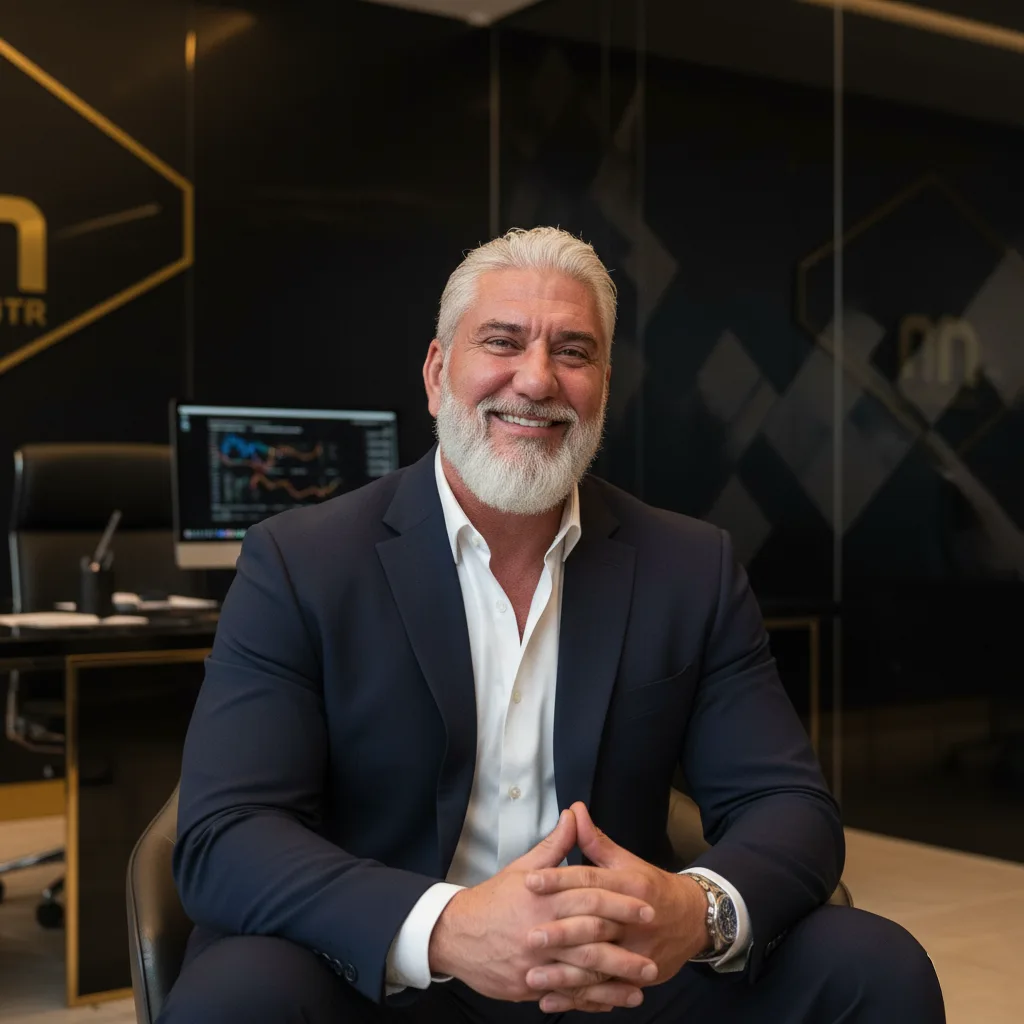
Kaan leads digital strategy at Titan Digital UAE, working with healthcare, dental, aesthetic, physiotherapy, and specialist clinics across Ras Al Khaimah, Dubai, Abu Dhabi, and the wider Northern Emirates. He has been running Titan Digital since 2008 across Canada, USA, Hong Kong, and the UAE, with an active focus on AI search visibility, schema architecture, and regulator-compliant content systems.