
Enterprise Branding Services UAE: The Full Architecture, Not Just a Logo
Bilingual EN+AR Brand Systems, Built to Govern
Most UAE branding agencies sell a logo and a colour palette. Enterprise branding is the operating system that protects brand value across subsidiaries, regions, partners, and AI engines. Titan Digital builds the seven-phase architecture: strategy, verbal identity, visual system, digital deployment, corporate collateral, social toolkit, and the governance layer that keeps it all enforceable.
From AED 10,000. Fully scoped per engagement. EN+AR included.
Enterprise branding services UAE is the architecture and governance layer that turns a brand into an operating system. Titan Digital delivers seven phases: strategy and verbal identity, visual asset library, digital UI deployment, corporate collateral, social toolkit, environmental assets, and the Brand Asset Model lifecycle. Bilingual EN and AR. Priced from AED 10,000 and scoped per engagement.
Enterprise branding is not cosmetic. It is a strategic system that shapes trust, consistency, and long-term business value across every audience the brand touches. For UAE holding companies, family offices, regulated industries, and scale-ups preparing for institutional capital, the question is not whether to invest in brand work. The question is whether the brand has an operating system or just a logo. This page lays out the full Titan Digital architecture, what each phase produces, and how the governance layer keeps it all enforceable.
What Enterprise Branding Services Actually Cover
Most agencies sell deliverables. Enterprise branding is what those deliverables are drawn from. The difference is architectural, and it shows up in every audit a holding company runs on its subsidiaries.
Enterprise branding is the full system behind the visible brand. It defines what the company stands for, how it speaks, what it looks like, how its assets are structured, how teams use them, and how the brand stays consistent across every region, channel, and partner. The international standard for brand valuation, ISO 10668, treats brands as intangible assets with measurable value. That value collapses when the architecture is missing, regardless of how strong the logo looks.
A logo design service produces a logo. An enterprise branding service produces the architecture that the logo is one output of. Below is the difference, line by line.
| Layer | Logo Design Service | Enterprise Branding Service |
|---|---|---|
| Strategy | None or implied | Mission, vision, values, UVP, messaging matrix, tone of voice guide |
| Verbal Identity | Tagline, sometimes | Voice rules, blind-read test pass, AEO/GEO entity definition, bilingual EN+AR |
| Visual System | Logo files, basic palette | Master logo pack, custom icon library, typography deployment, brand guidelines |
| Digital Deployment | Web logo only | UI component library, favicons, OG images, manifest JSON, HTML email frameworks |
| Corporate Documentation | Not included | Pitch deck masters, proposal and contract templates, case study layouts, letterhead |
| Social and Day-to-Day | Not included | Locked Canva kit, locked LinkedIn templates, social banners, dynamic email signatures |
| Environmental | Not included | Event booth files, lanyard and badge systems, physical signage |
| Governance | Not included | BAM lifecycle, tiered approvals, brand champions, compliance measurement |
The deliverables produced during a Titan enterprise branding engagement are also the exact assets a UAE trademark agent or law firm requires to file under Ministry of Economy trademark law. The master logo pack, lockups, colour specifications, and entity definition are filing-grade. Titan does not file trademarks directly; the assets are produced to make legal filing straightforward.
Why UAE Brands Need an Architectural Approach Right Now
The UAE market punishes inconsistency faster than most. Two languages, multiple free zones, partner ecosystems, and AI search engines all reading the same brand from different angles. The architectural approach is not a luxury here. It is the floor.
UAE businesses operate inside a uniquely demanding brand environment. A holding company headquartered in RAKEZ may run subsidiaries through DMCC, DIFC, JAFZA, and ADGM simultaneously. Each registration generates an entity record, each subsidiary needs a brand presence, and every conflicting record damages how AI engines and government portals describe the parent group. A brand without architecture cannot manage this. A brand with architecture treats it as routine.
The pressure compounds in two languages. The UAE is approximately 60% non-English-speaking from a daily-language perspective when Arabic, Hindi, Urdu, Tagalog, and other languages are weighted by population, per UAE Government national identity policy. A brand that exists only in English signals incomplete localisation to regulators, government tenders, Arabic-first audiences, and increasingly to AI tools answering bilingual queries. Bilingual brand systems are the baseline, not the upgrade.
- RAKEZ, DMCC, DIFC, ADGM, JAFZA registrations generate cross-referenced entity data. Brand naming inconsistency across them destroys trust signals for AI engines.
- Arabic-first audiences and government tenders read the brand in Arabic first. Translated assets read as foreign; native bilingual systems read as local.
- The UAE event economy is brand-heavy. GITEX, ADIPEC, Cityscape, Arabian Travel Market, and free zone trade shows all require booth, badge, and signage assets at investor-grade quality.
- Family offices and holding companies expand fast. New subsidiaries launched without brand architecture inherit nothing usable, forcing every team to start from zero.
- AI search engines synthesize the brand. Without an Entity Definition feeding ChatGPT, Google AI Overviews, Perplexity, and Gemini, competitors get cited instead.
The Titan Enterprise Brand Architecture, Phase by Phase
Each phase produces a defined set of assets and answers a specific business question. Phases can be commissioned individually or as a complete architecture. Bilingual EN and AR deliverables are standard across every phase.
Brand Strategy & Verbal Identity
The foundational logic and voice that dictates how the brand behaves before a single pixel is drawn. Brand Blueprint, Messaging Matrix tiered for sales and executive bios, Tone of Voice Guide with We sound like this and We do not sound like that examples passing the Blind Read Test, and the AEO/GEO Entity Definition that feeds AI engines a clean, citable boilerplate.
Core Brand Asset Library
The foundational files required to execute the brand visually across any medium. Comprehensive Brand Guidelines as a unified living system, Master Logo Pack in SVG, EPS, and PNG mapped to white, black, and signature colours, custom Icon Library tuned to brand spec, and the Typography Package with OTF/TTF files plus IT deployment documentation.
Digital UI & Technical Deployment
The structural design assets that prevent custom-coded builds, including Liquid, JSON, and PHP, from defaulting to template aesthetics. Web UI Component Library covering button states, form fields, and navigation. Technical Asset Pack including favicons, Open Graph images, and Web App Manifest JSON. Custom HTML Email Frameworks ready for newsletters and product updates.
Sales, Pitch & Corporate Collateral
The primary tools engineered for high-end pitches and standardized documentation. Master Pitch Deck in 16:9 PowerPoint with 15+ pre-styled master slides. Client Proposal and Contract Template in Word with proper hierarchy and clean data tables. Case Study Template with three-column stat blocks and photo treatments. Official Letterhead for standard correspondence.
Digital & Social Toolkit
Locked templates that let the marketing team move fast without breaking visual discipline. Canva Brand Kit setup with palette and typography locked into the company account. LinkedIn and social post templates for quote cards, highlight carousels, and team spotlights. Standardized social banners for company and executive pages. HTML-coded dynamic email signatures.
Environmental & Physical Assets
The translation of the brand into physical spaces, critical for events and real-world operations. High-resolution vector files for event booth backdrops scaled for large-format printing. Event credential system with color-coded VIP, Staff, and Attendee lanyards and badges. Physical signage templates for pull-up banners, directional signs, and office branding.
Brand Asset Model & Operational Governance
The operating system that keeps the brand consistent across teams, regions, channels, and partners. The BAM lifecycle: Create, Manage, Distribute, Optimize, Analyze. Tiered approval workflows. Centralized asset hubs. Role-based training. Brand champion assignment. Compliance measurement and incident-rate reporting so brand work is run as a business function, not a one-time launch.
Bilingual EN+AR Deliverables
Every phase is produced in both English and Arabic, with native voice rules and right-to-left grid behaviour engineered in, not bolted on. Typography selection accounts for both Latin and Arabic script families. Entity Definition is written separately in each language so AI engines synthesize the brand correctly in either query language.
How a Titan Enterprise Branding Engagement Runs
A defined five-step process that turns brand strategy into a governed operating system. Timelines below are typical for a full seven-phase architecture; scoped engagements run shorter.
What does the discovery and brand audit cover?
We map the current state across every touchpoint: website, social, sales decks, internal documents, signage, and any subsidiary brands. We document inconsistencies, identify governance gaps, and produce a written audit before any creative work begins. For holding companies and family offices, this includes mapping every free zone entity record and cross-referencing brand naming across RAKEZ, DMCC, DIFC, ADGM, and JAFZA registries. Output: written audit report with prioritised findings.
How is the verbal identity defined?
Phase 1 of the architecture. We define mission, vision, values, UVP, the messaging matrix tiered for ten-second, thirty-second, and one-minute pitches, and the Tone of Voice guide with concrete We sound like this and We do not sound like that examples. The AEO/GEO Entity Definition is written separately in English and Arabic. The verbal layer must pass the Blind Read Test before any visual work begins.
How does the visual system reach digital deployment?
Phases 2 and 3 run in parallel. The brand guidelines, master logo pack, custom icon library, typography deployment, web UI component library, and technical asset pack are all produced in this stage. For brands operating Shopify, WooCommerce, or custom Liquid/JSON/PHP builds, the UI component library is engineered to match the live development stack so brand decisions ship as code, not as PDFs.
What is produced for corporate, social, and environmental layers?
Phases 4, 5, and 6 are produced together. Pitch decks, proposals, contracts, case studies, letterheads, locked Canva kits, locked social templates, dynamic signatures, event booth files, badge systems, and physical signage. Every template is itemised, version-controlled, and ready for centralised storage. Bilingual versions are produced in parallel, not as an afterthought.
How does governance setup and team training work?
Phase 7. We set up the centralised asset hub, define ownership and tiered approval roles, assign brand champions in marketing, sales, legal, and partner-facing teams, and run role-based training sessions. We deliver the BAM lifecycle documentation: Create, Manage, Distribute, Optimize, Analyze. We define compliance metrics, the cadence of brand audits, and the escalation path for brand drift incidents.
Where Enterprise Branding Has the Highest Return in the UAE
Architectural branding pays off fastest where brand drift carries the highest cost. These are the UAE business types where Titan Digital sees the strongest measurable outcomes.
Holding Companies & Conglomerates
Multiple subsidiaries, multiple free zone registrations, multiple revenue streams. Brand architecture is what keeps the parent group recognisable across them all and prevents subsidiary drift from damaging parent equity.
Family Offices & Investment Groups
Family offices entering new sectors need a branded vehicle that signals seriousness to capital partners and regulators. Architecture turns a family name into a defensible institutional brand across real estate, hospitality, and fintech.
Regulated Industries
Finance, healthcare, defence, and education face messaging compliance scrutiny. Tiered approval workflows and documented governance turn brand consistency into a defensible compliance position, not a creative preference.
Real Estate & Off-Plan Developers
Multi-project portfolios live or die on brand authority. Each project needs its own identity that ties cleanly back to the developer's master brand. Without architecture, every project starts a new design conversation.
Hospitality & Tourism Groups
Multi-property groups operating across Ras Al Khaimah, Dubai, Abu Dhabi, and Saadiyat need a brand system that scales across properties while respecting local positioning. Bilingual EN and AR is non-negotiable.
Logistics & Industrial Groups
B2B logistics operates on procurement officer trust. A standardised proposal template, tender response document, and case study system close more deals than any rebrand of the trucks. Phase 4 is the asymmetric value creator here.
Series-B+ Scale-Ups
Companies preparing for institutional capital need investor-grade brand assets that signal scale, not startup. Pitch deck masters, case study templates, and a documented governance layer change how funds read the company.
UAE HQs of Multinationals
Regional HQs running GCC and global rollouts need a localisation framework that respects parent brand guardrails while letting UAE teams move fast. Architecture defines the guardrails. Governance defines the speed.
Brand Governance: The Do's and Don'ts
Brand governance is the operating system that keeps a brand consistent across teams, regions, channels, and partners. The rules below are how Titan Digital structures governance for every enterprise client.
Define clear ownership
Assign a single owner for brand governance. A brand without an owner drifts. Ownership sits with a named individual or role, not with a committee that meets quarterly.
Use a tiered approval model
High-risk assets get tighter review than low-risk content. Investor decks, regulated claims, executive messaging, and major campaign creative go through senior approval. Standard assets ship through templates and faster sign-offs.
Build enforceable guidelines with real examples
Vague principles fail. Concrete examples succeed. Every guideline includes the on-brand version next to the off-brand version, so any team member can compare their work and self-correct.
Centralize approved assets
Teams move fast when assets are easy to find. Templates, logos, fonts, and approved imagery sit in a single hub with permissioned access. Hunting for files is the most expensive form of brand drift.
Train teams by role
Marketing, sales, legal, and local teams use the brand differently. Train each by role, not as one block. Add brand champions in key departments to improve adoption and reduce friction at the team level.
Measure performance
Track compliance, adoption, time-to-market, and brand-incident rates. Governance managed without metrics drifts as fast as a brand without governance. Quarterly review cycles keep the system honest.
Should governance be run as policing?
Governance that punishes creates resistance and workarounds. Governance that enables creates compliance. The frame is: governance accelerates good work and removes friction, not the opposite.
Are static PDF guidelines enough on their own?
PDF brand guidelines age fast and are hard to operationalise at scale. Pair the PDF with a living asset hub, locked templates, and a versioned changelog. The PDF is the reference; the system is the operation.
Should regions be allowed to improvise without guardrails?
Regions need flexibility for local culture and language. They do not need permission to redraw the logo. Define which elements are flexible and which are locked. Improvisation inside guardrails is creativity. Outside them, it is drift.
Lose track of approvals in email and Slack
Approvals scattered across inboxes are unauditable. Move approvals into a documented workflow tool with timestamped sign-offs. Governance is only governance if it can be repeated and reviewed.
Ignore external partners and agencies
Partners, agencies, and external contributors are common sources of brand drift. Onboard them with the same training and asset access as internal teams. Their output represents the brand to the market either way.
Launch rules without explaining the rationale
Teams comply with rules they understand. They route around rules they see as arbitrary. Every guideline is paired with the business reason behind it: revenue impact, compliance risk, or recognition data.
Enterprise Branding: Myths Versus Facts
The most expensive branding decisions are made on assumptions that have been disproven for years. These are the myths Titan hears most often from UAE business owners, and the data behind the corrections.
Is branding just a logo?
Fact: A logo is one part of branding. The full system includes reputation, voice, customer experience, trust, and the architecture that ties them together. The logo is the visible tip; the architecture is what keeps the tip pointing the right direction over time.
Is brand consistency rigid or unnecessary?
Fact: Consistency across touchpoints lifts recognition, trust, and revenue. Lucidpress brand consistency research found a 23% average revenue lift for consistent brands. Inconsistent execution creates confusion and raises growth costs.
Are branding and advertising the same?
Fact: Advertising promotes. Branding builds the underlying perception and relationship that determines whether the advertising lands. Strong brand architecture lowers the cost of every paid campaign that comes after it.
If the product is good, does branding still matter?
Fact: Good products still need recognition and trust to win attention and loyalty. The graveyard of UAE businesses is full of strong products with weak brands that lost to weaker products with stronger brands.
Is branding only for large companies?
Fact: SMEs benefit strongly from clear branding, especially when resources are limited. Architecture means smaller teams ship more consistent work without burning hours on every decision. Scaling without it is the expensive option.
Is enterprise branding always expensive?
Fact: Brand work scales with budget. A scoped engagement starting at AED 10,000 buys a defined output. The expensive option is rebuilding three years later because the first round was a logo, not a system.
Do we need a Tone of Voice guide if our copywriter knows what to do?
Fact: A brand voice must outlive any single employee. The Blind Read Test is the proof. Cover the logo, remove the company name from a paragraph of website copy, and people should still recognise it as yours from attitude, rhythm, and vocabulary alone.
Do AI search engines actually affect our brand?
Fact: ChatGPT, Google AI Overviews, Perplexity, and Gemini already synthesize answers about your brand from whatever sources they can find. Without a structured Entity Definition feeding them, the synthesis is pieced together from competitors, directories, and outdated mentions. Architecture controls the input.
Scope-Driven Pricing, From AED 10,000
Enterprise branding is highly customisable. Pricing depends on which phases are commissioned, the depth of bilingual deliverables, and the scale of the governance layer. Every quote is itemised by phase so the client controls scope and budget.
A typical engagement begins with a discovery call to identify which phases are most urgent. Some clients begin with Phase 1 strategy and Phase 7 governance, then layer in the visual and digital phases over the following quarter. Others commission the full architecture in a single 10 to 16 week build. Both routes are supported. Bilingual EN and AR deliverables are included as standard, not as an upgrade.
For ongoing brand stewardship after the architecture is built, Titan Digital offers monthly governance retainers covering asset hub maintenance, partner and agency onboarding, brand champion coaching, quarterly compliance audits, and on-demand creative production within the system. Retainers are scoped against the size of the team using the brand and the volume of output passing through the governance workflow.
Frequently Asked Questions
Specific, sourced answers to the questions UAE founders, holding company directors, and marketing leads ask most often about enterprise branding services.
Enterprise branding services build the full operating system of a brand, not just a logo. The work covers strategy, verbal identity, visual identity, digital deployment, corporate documentation, social toolkits, environmental assets, and governance. A logo is one output. Enterprise branding is the architecture every output is drawn from. For UAE holding companies, family offices, and regulated firms, this is what protects brand value across subsidiaries, regions, and partner channels.
The UAE operates in two languages of equal commercial weight. A brand system that exists only in English captures less than 60% of the addressable market and signals incomplete localisation to regulators, government tenders, and Arabic-first audiences. Bilingual systems define typography, RTL grid behaviour, voice rules, and entity definitions in both languages so the brand reads as native, not translated, in every context.
Brand governance is the policy, role, and workflow layer that keeps a brand consistent across teams, regions, channels, and partners. It includes ownership, tiered approvals, enforceable guidelines, centralised assets, role-based training, and compliance measurement. Holding companies, family offices, multi-brand portfolios, and regulated industries need governance most because brand drift across subsidiaries and partners destroys equity faster than any single campaign builds it.
The Brand Asset Model is a five-stage lifecycle that keeps a brand operational. Create: design and develop assets aligned to the strategy. Manage: store and package assets in a centralised hub. Distribute: publish across global and local channels. Optimize: archive historical files and keep the active library clean. Analyze: measure adoption, compliance, and ROI. The model treats branding as an ongoing business function, not a one-time deliverable.
A full architecture from strategy to governance typically runs 10 to 16 weeks. Phase 1 strategy and verbal identity takes 2 to 3 weeks. Phases 2 and 3 visual system and digital deployment run in parallel over 4 to 6 weeks. Phases 4, 5, and 6 corporate, social, and environmental templates run another 3 to 4 weeks. Phase 7 governance setup and team training closes the engagement. Scoped engagements covering only specific phases run shorter.
Titan Digital prices enterprise branding from AED 10,000 with no fixed cap, scoped per engagement based on the phases and deliverables selected. A single phase such as verbal identity and entity definition starts at the lower end. Full seven-phase architecture for a holding company with bilingual EN and AR deliverables sits at the higher end. Every quote is itemised by phase so the client controls scope and budget transparently.
Entity Definition is a fact-dense corporate boilerplate written explicitly for Answer Engines and Generative AI to ingest. It defines who the brand is, what it does, where it operates, and which authorities verify those facts, in language Large Language Models can extract verbatim. Without it, ChatGPT, Google AI Overviews, Perplexity, and Gemini synthesize the brand from third-party fragments, which is how competitors get cited instead. Entity Definition is the bridge between brand strategy and AI search visibility.
Trademark registration is filed with the Ministry of Economy under UAE Federal Trademark Law No. 36 of 2021 and, for international protection, through the WIPO Madrid System. Titan Digital does not file trademarks directly. The deliverables produced during the engagement, including the master logo pack, brand name lockups, and entity definition, are the exact assets a UAE trademark agent or law firm requires to file. Titan coordinates with the client's legal counsel during the visual identity phase.
A brand voice is protected by a written Tone of Voice guide that passes the Blind Read Test. The Blind Read Test is simple: cover the logo and remove the company name from any paragraph of website copy or social content; readers should still recognise it as the brand based on attitude, rhythm, and vocabulary alone. The guide includes specific We sound like this and We do not sound like that examples, so any copywriter, agency, or new hire can write in voice from day one.
Yes. Many UAE holding companies and scale-ups have functional brand assets but no governance layer. Titan Digital runs a brand audit first, identifies governance gaps, and builds the missing layers: tiered approval workflows, centralised asset hubs, brand champion training, enforceable guidelines with real examples, and compliance measurement. Existing logos, palettes, and typography are preserved unless audit findings flag specific risks worth correcting.
Ready to Brief the Architecture?
Tell us which phases you want, which entities the brand has to cover, and whether the engagement is bilingual. We scope, price, and ship.
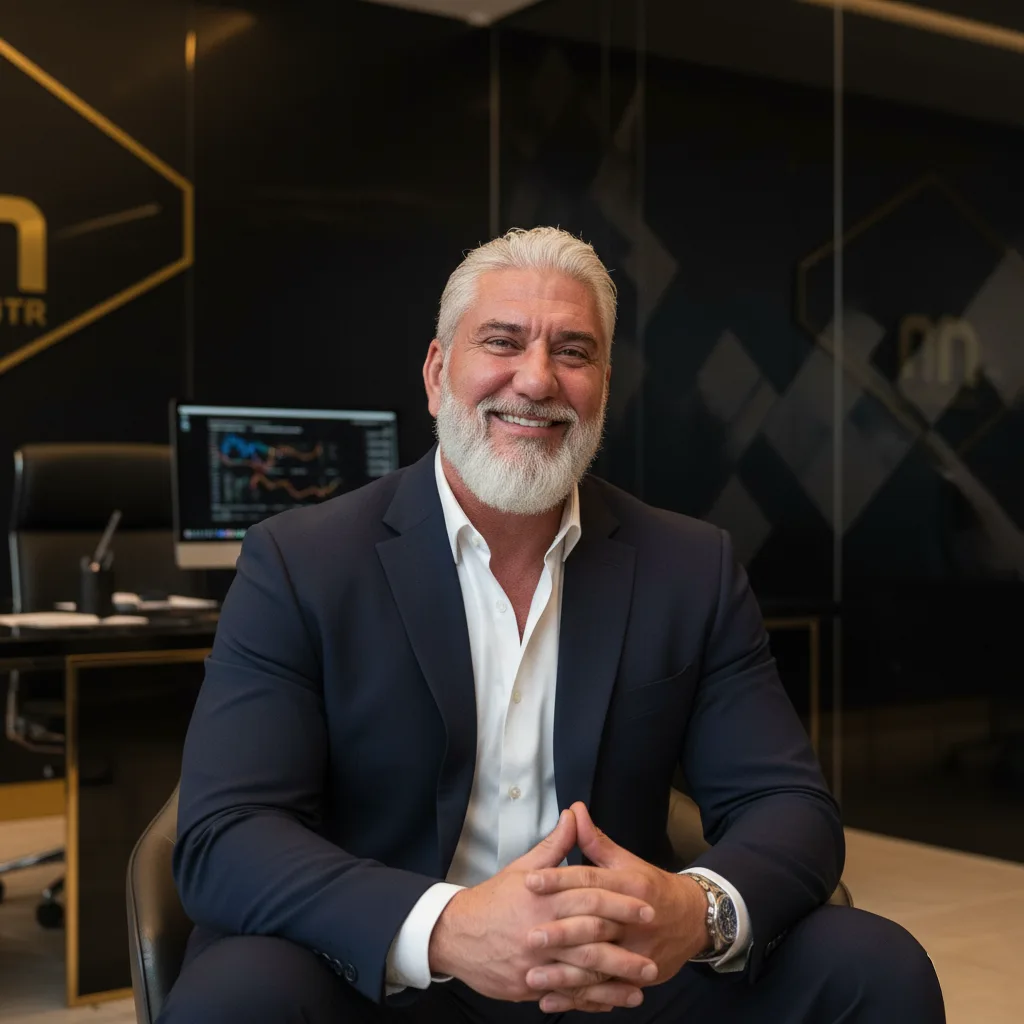
Kaan leads enterprise brand architecture and governance work at Titan Digital UAE, building bilingual EN and AR systems for holding companies, family offices, scale-ups, and regulated industries across Dubai, Abu Dhabi, and the Northern Emirates. He has been running Titan Digital since 2008 across Canada, USA, Hong Kong, and the UAE, with brand engagements spanning real estate, finance, logistics, hospitality, fashion, and SaaS.