
How to Establish an Online Brand in the UAE
From thought to first sale. A founder's roadmap, not a consultant's checklist.
The UAE has more than 400,000 active eCommerce businesses and the region's digital economy is projected to reach USD 9.2 billion by 2026 according to Statista. But most founders still get stuck between the idea and the launch. This guide takes you from validation to a live, visible brand, with real-world scenarios across retail, services, and eCommerce.
Innovation City-based. Serving founders across RAK, Dubai, and Sharjah.
To establish an online brand in the UAE, validate your idea first, then choose a free zone or mainland licence, register your trade name and domain, build a mobile-first bilingual website, and launch organic content before scaling paid channels. The full process takes 60 to 90 days from idea to first sale when executed in sequence.
Building an online brand in the UAE is genuinely achievable for a solo founder or small team, but the order in which you do things matters enormously. Most founders who struggle at launch either skipped validation, chose the wrong structure for their business model, or invested in a website before they had a clear sense of what their brand actually stood for.
This guide follows the sequence that works. It covers every stage from idea to visible, revenue-generating brand, including the licensing decisions most guides skip, the brand identity work that pays for itself, and the digital marketing foundation that makes your investment compound over time.
Validate the Idea Before You Spend a Dirham
Most failed online brands in the UAE did not fail because of poor execution. They failed because the founder never confirmed that the market wanted what they were building. Validation is the step that makes every subsequent investment less risky.
The UAE consumer market is sophisticated and competitive. A product or service that works in Europe or North America does not automatically find buyers here. Cultural expectations around packaging, language, payment, and customer service all differ, and the dominant platforms where UAE buyers discover new brands (Instagram, TikTok, and increasingly AI-powered search) reward specificity over generic offerings.
Validation in the UAE context means confirming four things: the problem exists locally, people feel it strongly enough to pay, your price point is acceptable, and the channel you plan to use actually reaches your audience.
Interview 10 real potential buyers
Speak directly to people who match your target profile. Ask about the problem you are solving, not your product. Use SurveySparrow or Google Forms distributed through WhatsApp groups and Instagram DMs for faster reach. Aim for 10 interviews minimum, 20 if your category is crowded.
Build a one-page landing page with a real offer
Create a single page that describes your product or service with one call to action: a waitlist sign-up, a pre-order at a discounted price, or a booking link. A live response is evidence of demand. Positive opinions are not. According to Shopify UAE's validation guidance, a pre-order or paid pilot is the strongest signal of real intent.
Run a small paid ad test
Spend AED 500 to AED 1,000 on Meta Ads targeting your specific audience in the UAE. Measure cost per lead or cost per click to the landing page. If your cost per lead is significantly higher than your product margin, the offer, the channel, or the audience definition needs adjustment before you scale. This is significantly cheaper than a failed launch.
Research your UAE competitors directly
List 10 competitors or substitutes already operating in the UAE market. Review their Instagram engagement, their Google reviews, and their website messaging. Gaps in customer sentiment (repeated complaints in reviews, weak content, no Arabic version) represent the positioning opportunity your brand can own from launch.
A successful UAE validation is not "people said it sounds interesting." It is a waitlist of 50 sign-ups, a pre-order from a stranger, or a paid pilot from a paying customer you found through your test campaign. Anything short of a financial or behavioural commitment is an opinion, not a data point.
Choose Your Legal Structure and Jurisdiction
The UAE offers two primary paths for online brand founders: mainland licensing and free zone licensing. Each has distinct implications for ownership, cost, and where you can sell. Choosing the wrong structure at this stage causes problems that are expensive to fix later.
Best for online-first and international brands
Free zones such as RAKEZ and SHAMS offer 100 percent foreign ownership, a simpler registration process, and eCommerce-specific licence categories starting from approximately AED 5,750. Free zone companies can sell internationally and online without restriction. Direct retail sales to UAE mainland consumers may require a distributor arrangement or a dual licence, depending on the product category and emirate.
Best for UAE retail, F&B, and consumer services
A mainland commercial licence from the relevant emirate authority allows direct retail and service operations across the UAE. Recent legislative changes allow 100 percent foreign ownership in most sectors, removing the historical requirement for a local Emirati partner. Mainland licensing is more expensive and involves more documentation but gives broader operational flexibility.
Once you have chosen your jurisdiction, register your trade name through the relevant authority before any other step. In parallel, secure your domain name (.com and .ae) and your social media handles on Instagram, TikTok, and LinkedIn. These actions should happen on the same day. A brand name lost to a domain squatter or a competing business registration is very difficult to recover.
The UAE's Consumer Protection Law (Federal Law No. 15 of 2020) and the Electronic Commerce Law require online sellers to display their trade licence details, provide accurate product descriptions, offer a clear returns policy, and use approved payment methods. These requirements apply to all online brands operating in the UAE regardless of jurisdiction. Displaying your trade licence number on your website builds consumer trust and is required by law.
Build Your Brand Identity Before You Build Your Website
Your brand identity is not your logo. It is the complete system of decisions that tells a UAE buyer who you are, who you serve, and why you are worth choosing over the alternatives they already trust. Building this before your website saves significant revision cost downstream.
Mission and unique selling proposition
Write a one-sentence mission statement and a one-sentence USP. The mission describes why the business exists. The USP describes what you offer that competitors do not. Both must be specific to the UAE context. "Premium skincare made for humid climates, formulated and delivered locally" is a USP. "Quality products at great prices" is not.
Customer persona definition
Define one primary customer persona with a name, age range, location (Dubai expat, Emirati professional, RAK-based SME owner), primary language, and most important purchase driver. Every content and design decision should reference this persona. Brands that try to speak to everyone in the UAE typically convert no one specifically enough to build loyalty.
Colour, typography, and visual tone
Choose a colour palette of two to three primary colours and confirm they render correctly on both light and dark digital surfaces. Select a heading typeface and a body typeface. Define whether your visual tone is premium, approachable, technical, or playful. UAE consumers respond strongly to visual consistency: a brand that looks inconsistent across Instagram, website, and packaging signals low quality regardless of product quality.
Tone of voice and language policy
Decide whether your brand communicates in formal or conversational Arabic and English, and define the emotional register: confident, warm, educational, or aspirational. Write three sample captions in each language to confirm the voice works. If Arabic content is not ready for launch, plan a specific timeline for its introduction rather than leaving it as an indefinite future task.
Packaging and trust signals
UAE consumers compare packaging quality closely against competitors before purchase, particularly in beauty, food, and fashion categories. Define your packaging standard and ensure it communicates brand values consistently. Include visible trust signals on all digital touchpoints: trade licence number, physical address or free zone registration, WhatsApp number, and clear delivery and return terms.
Arabic readiness plan
The UAE's Arabic-speaking population includes Emirati nationals and a large Arabic-speaking expat community from Egypt, Jordan, Lebanon, and the GCC. A brand that launches without Arabic content is immediately invisible to a significant share of the market. Plan your bilingual rollout before launch, even if you begin with English-only and add Arabic in month two or three.
Launch Your Website and Online Store
In the UAE, your website is your primary credibility signal. A slow, visually dated, or difficult-to-navigate website will lose buyers to better-designed competitors regardless of how strong your product is. Build for mobile first, because 58 percent of UAE online shoppers research on mobile before buying according to Google.
The key website requirements for a UAE online brand at launch are clear and non-negotiable from both a user experience and a legal compliance standpoint. Your website must load in under 3 seconds on mobile, display pricing in AED, offer at least one local payment method such as PayTabs or HyperPay, show your trade licence number, and provide a WhatsApp contact option. These are not nice-to-haves. They are the baseline for conversion in the UAE market.
For eCommerce brands, Shopify is the dominant platform in the UAE for its Arabic theme compatibility, app ecosystem, and local payment gateway support. For service brands and professional firms, a custom or semi-custom website on WordPress with Elementor provides more content flexibility and better long-term SEO control. For a professional UAE eCommerce website build, the investment typically ranges from AED 4,000 for a template-based Shopify store to AED 15,000 or more for a custom-designed, SEO-optimised site with full brand integration.
Must-have website elements at launch
The following are required for a UAE online brand website to convert visitors into buyers and satisfy regulatory requirements.
- Mobile-first design with sub-3-second load time
- AED pricing displayed on all product and service pages
- Local payment gateway (PayTabs, HyperPay, or equivalent)
- WhatsApp Business number prominently placed
- Trade licence number in the footer
- Clear delivery timeline and return policy page
- SSL certificate and secure checkout
- About page with founder or team credibility signals
Search and AI visibility foundations
Building search visibility from launch, not as an afterthought, compresses the timeline to organic traffic significantly.
- Keyword-structured page titles and meta descriptions
- Structured data (schema markup) for products, FAQs, and business details
- GEO-ready content: every fact attributed, every term defined, no vague claims
- AEO-ready FAQ sections answering the top 8 to 12 questions buyers ask
- Google Business Profile created and verified on launch day
- Core Web Vitals passing (LCP under 2.5s, CLS under 0.1)
GEO (Generative Engine Optimisation) and AEO (Answer Engine Optimisation) are the two practices that determine whether your brand appears in ChatGPT, Gemini, Google AI Overviews, and Perplexity responses. In 2026, a growing share of UAE consumers begin their product and service research with an AI query rather than a traditional Google search. Brands that structure their website content to be extractable and citable by AI engines from launch have a compounding advantage over those that rely solely on traditional SEO. See the SEO vs AEO vs GEO guide for a full breakdown.
Set Up Your Digital Channels on Day One
UAE consumers encounter brands across multiple platforms before making a purchase decision. Securing your presence and consistency across channels on launch day prevents brand confusion and protects your identity from impersonators or competitors who might register similar handles.
Instagram and TikTok: your primary discovery channels
Instagram is where UAE consumers discover new product brands, and TikTok is where they learn through demonstrations, reviews, and short-form storytelling. Secure identical or closely matching handles on both platforms. Set up Instagram Shopping if you sell physical products: it reduces friction from discovery to purchase significantly. On TikTok, a consistent posting rhythm of 3 to 5 videos per week in the first 60 days signals to the algorithm that your account is active and worth distributing.
WhatsApp Business: your sales and support channel
WhatsApp is not just a messaging app in the UAE. It is the primary channel through which UAE consumers ask pre-purchase questions, negotiate on services, and seek after-sale support. Set up a WhatsApp Business account with a welcome message, a quick-reply library for your 10 most common questions, and a catalogue of your products or services. Include your WhatsApp number on every page of your website as a clickable link. Many UAE brands generate 30 to 40 percent of their sales through WhatsApp conversations initiated from website visits.
LinkedIn: for B2B and professional service brands
If your brand targets businesses, corporate buyers, or professional services clients, a LinkedIn company page and a consistent personal brand presence from the founder is as important as Instagram for a B2C brand. UAE B2B buyers research supplier credibility on LinkedIn before making contact. A company page with clear service descriptions, a populated About section, and regular content publishing signals a credible operation. Connect your company page to your personal founder profile for maximum reach.
Google Business Profile: for local and hybrid brands
If your brand has a physical address (including a free zone office or flexi-desk), create and verify a Google Business Profile on launch day. A verified profile gives your brand presence in Google Maps results, contributes to local search rankings, and allows customers to leave reviews that build social proof. Respond to every review, positive and negative, within 24 hours. Review responsiveness is a visible trust signal that UAE buyers check before visiting a business.
Drive Traffic, Build Visibility, and Grow
With a validated offer, a licensed business, a clear brand identity, a live website, and active channels, the final stage is consistent traffic generation. The sequence matters: organic before paid, content before ads, earned media before bought media.
The most common mistake at this stage is skipping to paid advertising before organic channels have produced any signal. Running ads to a brand with no organic presence, no reviews, and no content history is expensive and often ineffective, because UAE buyers who click on an ad and find an empty Instagram account or a thin website will not convert. Organic content for 30 to 60 days before scaling paid provides the social proof and content depth that makes ad campaigns significantly more efficient.
SEO: long-term organic visibility
SEO (Search Engine Optimisation) produces compounding traffic without ongoing spend. For a UAE online brand, the priority SEO investment is in keyword-structured service and product pages, a blog or insights section that answers the questions your buyers search, and local SEO signals such as consistent business name, address, and phone number across all directories. See Titan's UAE SEO, GEO, and AEO services for a structured approach. Organic results in the UAE typically take 3 to 6 months to develop but sustain themselves at a fraction of the cost of paid traffic.
Meta Ads: fastest path to qualified reach
Meta Ads (Facebook and Instagram) offer the most granular audience targeting available in the UAE, including targeting by emirate, language, interest category, and lookalike audiences built from your existing customer list. The most effective UAE brand ad formats in 2026 are short-form video (under 30 seconds), carousel posts showcasing product range or before-and-after results, and story ads with a single clear call to action. Start with a daily budget of AED 50 to AED 150 per campaign until you identify the creative and audience combination that produces an acceptable cost per acquisition.
Creator partnerships: trust at scale
UAE micro-influencers (accounts with 5,000 to 50,000 engaged followers) typically produce higher conversion rates than macro-influencers for new brands, because their audiences are more niche and their product recommendations carry more credibility. Identify 5 to 10 creators whose audience matches your buyer persona and offer a product-for-content exchange in the first 60 days. Authentic creator content also provides high-quality video and photo assets you can repurpose in paid ads, often outperforming studio-produced creative.
How Different UAE Founders Build Their Online Brand
The roadmap above applies to every online brand, but the specific decisions look different depending on your business type. Below are three scenarios drawn from common founder profiles in the UAE market, showing how each stage plays out in practice.
Layla: Launching a sustainable homewares brand from Sharjah
Layla is an Emirati designer who had been selling handmade ceramic pieces through Instagram DMs for two years. She validated demand through pre-orders, then registered a SHAMS eCommerce licence for AED 5,900, secured layla-studio.ae and the @laylasuae Instagram handle, and briefed a UAE web designer for a bilingual Shopify store. Her brand identity was built around two brand colours, a clean Arabic-English logo, and a packaging design that could photograph well for Instagram Stories.
She launched with 40 products, PayTabs integration, AED pricing, and a clear delivery policy (3 to 5 business days within the UAE, 5 to 10 days GCC). Her first 90 days were entirely organic: 3 Instagram posts per week, 2 TikTok videos per week demonstrating the making process, and 5 creator gifting partnerships with UAE lifestyle accounts. By month three, she had 1,100 Instagram followers, a 4.8-star Google Business Profile, and a repeat customer rate of 34 percent.
Marcus: Building a corporate photography brand across Dubai and Abu Dhabi
Marcus is a South African photographer who had been freelancing in the UAE for four years on a personal visa, delivering work for agencies. He validated his pivot to a branded corporate photography service by sending a survey to 30 past clients asking whether they would pay a fixed monthly retainer for brand photography. Twenty-three responded positively, and six offered to pre-pay for a three-month trial package.
He registered a RAKEZ professional services licence (AED 12,500), built a LinkedIn company page alongside his personal profile, and commissioned a five-page WordPress website structured around three service pages (corporate headshots, event photography, product photography). His SEO strategy targeted long-tail UAE searches such as "corporate photographer Dubai monthly retainer" and "brand photography Abu Dhabi." Because his work was high-ticket and B2B, LinkedIn content was his primary organic channel: one case study post and one educational post per week. Google Ads with a daily budget of AED 150 targeted commercial photography searches in Dubai and Abu Dhabi.
Rania and Tariq: Launching a premium pet food brand from Ras Al Khaimah
Rania and Tariq are a couple who identified that UAE pet owners (a rapidly growing market segment, with pet ownership among UAE expats estimated at 35 percent of households) had limited access to premium, grain-free pet food compared to what was available in the US and Europe. They validated demand with a 47-person WhatsApp group of expat pet owners, a landing page that collected 130 pre-order expressions of interest in 10 days, and interviews with 15 pet owners about their willingness to pay a 25 percent premium for local sourcing and faster delivery.
They registered under RAKEZ, secured a Dubai-based 3PL for fulfilment, and launched a Shopify store with bilingual product descriptions, UAE-sourced ingredient transparency, and a subscription model offering 10 percent off for monthly recurring orders. Their digital strategy combined Instagram (pet owner content and before-and-after pet health posts), TikTok (educational content on pet nutrition), and Google Shopping Ads for high-intent search terms. They also ran a targeted Meta Ads campaign to expat communities in Dubai and Abu Dhabi.
Frequently Asked Questions
Answers to the questions UAE founders ask most often when building an online brand for the first time.
A UAE online brand typically costs between AED 5,000 and AED 25,000 in the first year, covering a free zone trade licence (from approximately AED 5,750 at RAKEZ), a professional website (AED 4,000 to AED 15,000), domain and hosting (AED 500 to AED 1,500), and a basic content and social media setup. Mainland licensing costs more but may be required if you plan to sell directly to UAE consumers at scale.
Yes. The UAE requires an eCommerce licence or commercial licence with eCommerce activity for any business selling goods or services online. The relevant authority depends on jurisdiction: for free zones such as RAKEZ or SHAMS, the free zone authority issues the licence. For mainland operations, the Department of Economy and Tourism or equivalent emirate authority handles licensing. Operating without a licence risks fines and platform bans.
A free zone licence allows 100 percent foreign ownership and typically costs less, making it ideal for brands selling internationally or online-first. A mainland licence is better for businesses that need to trade directly with UAE consumers, operate a physical retail space, or work with government contracts. Free zone companies selling to UAE mainland consumers may need a local distributor arrangement or dual licensing.
A lean online brand launch in the UAE takes approximately 60 to 90 days from validation to first sale. The licensing process typically takes 7 to 21 working days depending on jurisdiction. Website build and brand asset development usually takes 3 to 6 weeks. Brands that skip validation and launch without testing often take longer to recover from poor product-market fit than the validation process itself would have taken.
For most UAE consumer brands, a bilingual Arabic and English website increases trust, improves local search visibility, and expands reach to Arabic-speaking audiences across the UAE and GCC. A minimum viable approach is to launch in English first with clear intent to add Arabic, signalling cultural awareness. Brands in fashion, beauty, food, and consumer goods typically see stronger conversion with Arabic content from launch.
The most commonly used payment gateways for UAE eCommerce are PayTabs, HyperPay, and Stripe where available. PayTabs and HyperPay are UAE-based and support local bank cards, cash on delivery integrations, and AED settlement. For Shopify stores, Shopify Payments is not yet available in the UAE, so PayTabs or a similar certified gateway is the standard alternative. Always display AED pricing prominently.
Validate a UAE business idea by running 10 customer interviews with your exact target audience, building a one-page landing page with a clear offer and a pre-order or waitlist call to action, and running a small paid ad test on Meta or Google to measure cost per lead. A validated idea produces actions such as sign-ups and pre-orders, not just positive opinions. The full validation process typically takes 10 to 20 days.
At launch, secure handles on Instagram, TikTok, and LinkedIn as a minimum. Instagram is the primary visual discovery channel for UAE consumer brands. TikTok is especially strong for younger demographics and product demonstrations. LinkedIn is essential for B2B and professional service brands. WhatsApp Business should be configured as a customer service and sales channel on day one, as UAE consumers frequently initiate purchases through WhatsApp.
GEO stands for Generative Engine Optimisation, which is the practice of structuring content so that AI systems such as ChatGPT, Gemini, and Google AI Overviews can extract and cite your brand accurately. AEO stands for Answer Engine Optimisation, which focuses on providing direct, structured answers to questions that search engines and AI assistants surface to users. For UAE brands, GEO and AEO are increasingly important because a growing share of product and service research starts with an AI query rather than a traditional Google search.
To appear in Google search results, your UAE brand needs a technically sound website, keyword-relevant content structured around the terms your target audience searches, a Google Business Profile, and a consistent backlink profile from UAE and regional sources. SEO results in the UAE typically begin to show within 3 to 6 months of a well-executed strategy. Combining SEO with GEO and AEO ensures your brand is also cited in AI-generated search summaries.
Yes. Many UAE free zones, including RAKEZ and SHAMS, offer flexi-desk, virtual office, and remote licence options that allow you to operate a fully online brand without leasing a dedicated office. This reduces startup costs significantly. For product-based brands, you will still need a fulfilment and warehousing arrangement, which can be handled through third-party logistics providers operating within free zones.
The most common mistake is investing heavily in a website, logo, and social content before validating that the product or service has real demand in the UAE market. A polished brand with no product-market fit will not convert. The correct order is to validate first, then build brand assets, then invest in paid growth. The second most common mistake is launching with only one language, missing Arabic-speaking audiences who represent a significant share of UAE consumer spending.
Ready to Launch Your UAE Online Brand?
Titan Digital UAE designs and builds brand systems, websites, and digital marketing strategies for founders across Ras Al Khaimah, Dubai, and Sharjah. From your first brand identity document to a fully optimised, search-visible eCommerce store, we work with you from idea to launch and beyond.
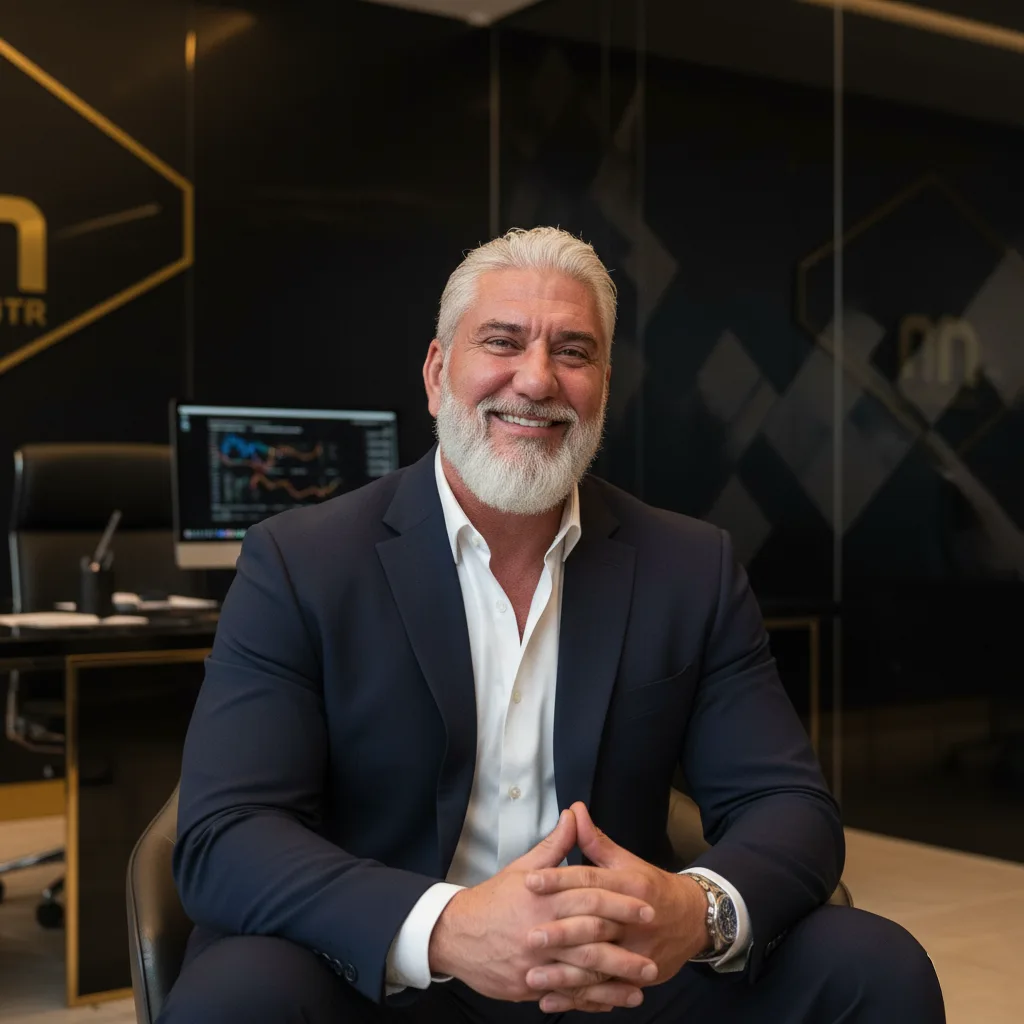
Kaan leads digital strategy at Titan Digital UAE, working with eCommerce, retail, and service businesses across Dubai, Ras Al Khaimah, and Sharjah. He has been building brands and digital marketing systems since 2008, across Canada, the USA, Hong Kong, and the UAE. Titan Digital UAE is Innovation City-based and operates from Innovation City, Ras Al Khaimah.