
Male Aesthetics Marketing in the UAE: Why Clinics Are Getting It Wrong
The $5.6 billion market that nobody is talking to correctly
The global male aesthetics market is projected to reach $5.6 billion by 2026. Yet across the UAE, every clinic ad looks identical: a receding hairline, a ring light, a sterile clinic room, and a discount code. This is a $5.6 billion blind spot built on a flawed marketing playbook.
Strategy insight from Titan Digital UAE, Ras Al Khaimah
Male aesthetics marketing in the UAE fails because clinics apply female-centric beauty frameworks to male audiences. Men respond to structural and performance language, not transformation narratives. Effective male clinic marketing positions procedures as fatigue mitigation, structural restoration, and baseline maintenance rather than cosmetic improvement or youth recovery.
I want to start with a personal observation. A good number of my close friends have had multiple cosmetic alterations in the past few years. Hair transplants. Jawline augmentation. Dental implants. Under-eye procedures. None of them announced it. None of them framed it as anything dramatic. They simply fixed something structural that was bothering them and moved on. That quiet normality is exactly what the male aesthetics market in the UAE is missing in its advertising. The sector is booming. The messaging is not keeping up.
The UAE Feed Problem: Identical Ads, Zero Psychology
Living in Ras Al Khaimah means my social feeds across Instagram, TikTok, and LinkedIn are a relentless blur of clinic advertisements. The UAE has one of the highest per-capita concentrations of cosmetic surgeons and aesthetic clinics globally. The demand is real and growing. The advertising is a disaster.
Every male-targeted clinic ad in the UAE follows the same exhausted template. A tight crop of a receding hairline. A sterile clinic room. A ring light. A generic discount code with a three-day countdown. The industry has taken its standard female-centric marketing playbook, swapped the background colour to dark blue or charcoal, and expected male executives to convert. It is a fundamental misreading of consumer psychology.
The problem runs deeper than visual design. It is a vocabulary problem. Words like rejuvenate, glow, pamper, flawless and turn back the clock are embedded in the language of the aesthetics industry because they have worked historically, with a female client base that responded to transformation and beauty-standard narratives. Apply that same register to a male audience and you trigger immediate skepticism. Men do not want to be sold a transformation. They want to fix a specific, identifiable structural problem and move on.
The UAE clinic market is not failing because of a lack of demand. Male cosmetic procedure rates are growing consistently year on year across the Gulf region. It is failing because clinics are broadcasting to a male audience in a language designed for a female one. The demographic mismatch between sender and receiver is producing uniformly weak conversion rates despite significant ad spend.
The Cautionary Tales: What Over-Correction Looks Like
Before mapping the solution, it is worth understanding why male consumers are so instinctively cautious about cosmetic procedures. The pop culture archive is full of high-profile disasters, and those disasters are etched into the male collective memory.
The Mickey Rourke Problem
Rourke originally sought surgery to repair genuine injuries sustained during his boxing career. The work escalated into multiple nose reconstructions and cheekbone procedures that collectively produced a patchwork result he later acknowledged was the consequence of choosing the wrong surgeon. His face became the reference point for what cosmetic excess looks like on a man. The work did not restore structure. It created a new, unnatural one.
The Simon Cowell Overload
Cowell represents the classic trap of applying a female aesthetic framework to a male face. He admitted to overindulging in facial fillers across multiple sessions in pursuit of a younger look. The result was so pronounced that his own son reportedly did not recognise him in older photographs. Cowell eventually had the fillers dissolved to reclaim a natural appearance. His trajectory is an almost perfect diagram of what happens when the goal is transformation rather than structural maintenance.
Both cases illustrate the same underlying error. The surgeons and clinics involved were applying female aesthetic logic to male anatomy. The female aesthetic ideal has historically favoured softness, fullness, and upward-lifted features. Applied to a male face, those same interventions destroy the structural angularity that reads as masculine competence. Men who walk into a clinic instinctively know this. They have seen the results on television. Their wariness is not irrational vanity; it is learned pattern recognition.
This is why the marketing language matters enormously. If a clinic uses transformation vocabulary with a male audience, it activates this stored archive of cautionary tales immediately. The prospect does not book a consultation. He scrolls past.
Why Men Actually Get Cosmetic Procedures
The male approach to cosmetic alteration is not about vanity in the traditional sense. Understanding the real psychological drivers is the only way to build marketing that works. The motivation is closer to the mindset of weight training or recovering from a sports injury than it is to traditional beauty culture.
Managing a functional liability
A 45-year-old founder walking into a clinic to fix under-eye bags is not seeking beauty. He is eliminating a signal that broadcasts chronic fatigue to every room he walks into. In a boardroom, a negotiation, or a client pitch, looking exhausted is a tactical disadvantage. The procedure is a hardware update that removes a false signal of weakness. The motivation is entirely functional, not cosmetic.
Reclaiming structural control
Hair loss is experienced by many men as a visible loss of control over their own appearance. A hair transplant is not pursued as a beauty enhancement. It is a surgical reclamation of territory. The permanence of the solution is a core part of the appeal. Men want to fix the problem definitively and move on. They are not interested in ongoing maintenance or transformation narratives. They want a permanent structural fix.
Returning to a competent baseline
The aesthetic reference point for most men undergoing subtle procedures is not a younger version of themselves. It is a structurally capable version of themselves. The Daniel Craig standard: weathered, experienced, but architecturally formidable. Men do not want smooth. They want structured. They want the face that matches the energy and capability they feel internally, not the one that chronic stress and sleep deprivation have produced externally.
The dominant male aesthetic trend in 2026 is what the industry is calling quiet luxury aesthetics. Men want a straighter, structured nasal profile, not a thin upturned nose. They want subtle Botox that reduces harsh expression lines without freezing their face. They want results that nobody can identify as cosmetic work. The best procedure, in the male client's view, is the one that produces no visible evidence it was ever performed. Market to that.
The Two Procedures That Prove the Point
Hair transplants and blepharoplasty are the two procedures where the gap between how clinics market them and how men actually perceive them is most stark. Both are growing rapidly. Both are being marketed almost entirely incorrectly to the male demographic.
Blepharoplasty: the fatigue management surgery
Blepharoplasty is the surgical removal of excess skin and repositioning of fat pads around the eyes. As men age, the orbicularis oculi muscle weakens and the periorbital fat pads descend, creating the appearance of persistent under-eye bags and heavy upper lids. The result is a face that signals chronic exhaustion to the external world, regardless of the individual's actual energy levels.
Most clinic ads position this as a youth restoration procedure. That framing fails with male clients. The male executive requesting blepharoplasty is not trying to look twenty years younger. He is trying to stop his face from broadcasting a false signal of fatigue in every professional interaction he has. The correct marketing angle is not beauty or youth. It is fatigue mitigation and professional signal management. Those are the words that convert.
Hair transplants: the structural reclamation
Hair transplantation involves the surgical redistribution of healthy follicular units from donor areas, typically the posterior scalp, to areas of hair loss. The procedure is permanent and produces results that follow the natural growth pattern of the patient's existing hair. This permanence is the most important psychological factor for male clients, not the cosmetic outcome.
Clinic ads in the UAE almost universally lead with dramatic before-and-after photography and emotional language about confidence and transformation. This approach activates cynicism rather than interest in most male prospects. The correct framing is surgical precision and a permanent structural fix. The message should be: this is not a treatment you manage indefinitely. It is a definitive solution to a structural problem, performed once. That is the language men are actually looking for.
Beyond these two flagship procedures, the same logic applies across the full spectrum of male aesthetic treatments. Rhinoplasty is not about achieving a particular look; it is about correcting a structural issue that has bothered a man for years. Jawline augmentation restores angular definition that has softened with age. Subtle injectables manage expression lines without altering the fundamental character of the face. Every single one of these procedures has a functional, structural rationale that most clinics are completely ignoring in their advertising.
For clinics operating in the UAE market, the insight from the UAE visibility landscape applies directly here: the businesses that dominate are the ones that understand exactly what their client is thinking before the client has articulated it themselves. Male aesthetic clients are not saying "I want to look younger." They are saying, silently and internally, "I want my face to stop working against me."
The Vocabulary Overhaul Clinics Need
Language is the primary failure point in male aesthetics marketing. The aesthetics industry has spent decades building a vocabulary that resonates with women. That vocabulary is not neutral. It actively repels male clients. Here is the complete replacement set.
| Retire Immediately | Replace With | Why It Works |
|---|---|---|
| Rejuvenate / Rejuvenation | Structural restoration | Restoration implies a pre-existing baseline, not a new aesthetic. Men want to return, not transform. |
| Glow / Radiance | Clarity / Definition | Clarity and definition are architectural terms. They describe the face the way a man would describe a building or a product design. |
| Pamper / Treat yourself | Maintain / Optimise | Maintenance and optimisation align with the language of performance, fitness, and engineering. They carry no vanity connotation. |
| Turn back the clock | Eliminate the fatigue signal | Specific, functional, and solvable. It names the exact problem without invoking the concept of reversing time, which triggers skepticism. |
| Flawless / Perfect | Formidable / Capable | Flawless is a beauty standard term. Formidable and capable are competence terms. Male clients are buying competence signals, not beauty standards. |
| Beauty transformation | Structural integrity | Integrity is borrowed from engineering and character assessment. It frames the procedure as a quality standard, not a cosmetic ambition. |
The principle underlying this vocabulary shift is simple. Men approach cosmetic procedures the way they approach a conversation with a good mechanic. They want to describe the specific problem clearly, understand the permanent fix available, and get the work done without drama. A mechanic who responded to "my engine is knocking" with "let us rejuvenate your driving experience" would lose the client immediately. That is exactly what aesthetic clinics are doing with the language they currently use.
This is also where UAE digital marketing strategy differs from global templates. The male professional demographic in the UAE skews toward high-achieving, time-efficient, results-oriented individuals. They have a low tolerance for marketing that does not immediately address their actual problem. Brevity, precision, and functional language are not optional. They are the baseline requirement for earning attention in this market.
The Ad Framework That Actually Converts
Vocabulary alone is not enough. The structural logic of the ad itself must change. Here is the framework that aligns with how male clients actually think about cosmetic procedures, built around the specific psychological triggers the sector is currently ignoring.
Name the specific liability
Do not open with the procedure. Open with the precise functional problem the procedure solves. Under-eye bags are not a cosmetic issue; they are a signal that makes a person look chronically exhausted to every room they enter. Hair loss is not a beauty concern; it is a visible indication of a structural change the client did not choose and cannot control. Name it with clinical specificity. Vague emotional appeals do not land.
Rationalise the decision
Give the client the internal script he needs to justify the decision to himself, and to any peers he might mention it to. Frame the procedure as a logical business or performance decision. A hair transplant is a permanent redistribution of existing follicles that solves a structural problem once, definitively. Blepharoplasty removes excess tissue that is producing a false signal about the client's energy levels. These are engineering solutions to engineering problems.
Lead with the permanence
The most underused selling point in male aesthetic marketing is permanence. Male clients are not looking for ongoing treatments or seasonal maintenance cycles. They want to fix the problem, have it stay fixed, and redirect their attention elsewhere. Any ad that emphasises the one-time, definitive nature of a procedure will outperform an ad that talks about results or transformation. Permanence is the primary male buying trigger in this sector.
Rather than a before-and-after gallery and a list of services, consider this hook line for a blepharoplasty campaign targeting male executives over 40: You sleep eight hours, but your face tells your clients you only slept three. Stop managing the symptoms. Fix the structure.
That single line does everything the current template fails to do. It names the exact liability in functional language. It frames the procedure as a definitive solution rather than a cosmetic choice. It addresses the client as a professional whose appearance affects his professional outcomes. It does not use a single beauty-industry term. It converts because it speaks precisely to the internal monologue of the client it is targeting.
Clinics operating in the UAE market that want to build authority in the male aesthetics space should also consider their broader medspa and aesthetic clinic digital presence as part of a cohesive strategy. The ad that runs on Instagram needs to land on a page that speaks the same structural, functional language. A well-crafted ad that links to a page full of transformation photography and youth-recovery copy will lose the conversion at the last step. Consistency of psychological register across every touchpoint is non-negotiable.
The broader principle here extends beyond the aesthetics sector. The insight also applies to the question of how to build a sustainable digital marketing engine in the UAE: audience-specific language is not a nice-to-have feature of good marketing. It is the load-bearing structure. Without it, every other element of the campaign is a cost rather than an investment.
Frequently Asked Questions
Common questions about male aesthetics marketing strategy and the UAE clinic market.
Most UAE clinics apply female-centric marketing frameworks to male audiences without adjustment. They use transformation language, emotional youth-focused messaging, and before-and-after visuals that trigger immediate skepticism in men. Male clients respond to structural and performance language, not beauty narratives.
Hair transplants and blepharoplasty (under-eye bag removal) are among the fastest-growing procedures for men in the UAE. Jawline augmentation, rhinoplasty, and injectables such as Botox are also increasingly common, driven by the region's dense concentration of aesthetic clinics and growing male awareness.
Effective hair transplant marketing for men focuses on permanence, structural restoration, and reclaiming control rather than cosmetic improvement. The message should frame the procedure as a definitive, surgical redistribution of existing follicles that eliminates an ongoing problem, not a beauty enhancement.
The global male aesthetics market was projected to reach approximately $5.6 billion by 2026. The sector has grown substantially over the past decade as procedures shifted from a primarily female client base to include a significant and growing male demographic across the UAE, Europe, and North America.
Clinics should retire words like rejuvenate, glow, pamper, flawless, and turn back the clock when targeting men. These terms activate beauty and vanity associations that male clients immediately dismiss. Replace them with terms like fatigue mitigation, structural restoration, architectural integrity, and baseline maintenance.
Female aesthetic marketing historically leads with transformation, emotional connection to youth, and beauty standards. Male aesthetic psychology is closer to the mindset of athletic recovery or structural maintenance. Men want to fix a specific functional problem permanently, not undergo a broad transformation.
Blepharoplasty, the surgical removal of under-eye bags and excess eyelid skin, directly addresses the appearance of chronic fatigue. As men age, fat pads under the eyes descend and create a permanently tired look. For executives and business owners, this projects weakness in high-stakes environments, making the procedure a performance fix rather than a beauty choice.
Cases such as Mickey Rourke and Simon Cowell illustrate what happens when female-centric aesthetic frameworks are applied to male faces. Surgeons over-corrected, over-filled, and chased artificial youth rather than preserving structural integrity. Cowell eventually had his fillers dissolved to restore a natural appearance after overcorrection made him unrecognisable to close family.
The UAE has one of the highest per-capita concentrations of aesthetic clinics and cosmetic surgeons globally. Ras Al Khaimah, Dubai, and Abu Dhabi all have active clinic markets. Despite this density, advertising across the region remains largely undifferentiated, with most clinics using identical visual and messaging templates regardless of target gender.
The highest-performing ad framework for male aesthetic clients addresses a specific functional liability and frames the procedure as a logical, permanent solution. An example: You sleep eight hours, but your face tells your clients you only slept three. Stop managing the symptoms and fix the structure. This approach treats the alteration as a business decision rather than a cosmetic one.
Your Clinic Needs a Different Playbook
If your UAE clinic is running ads that look like every other clinic's ads, the problem is not your budget. It is your language. Let us build a strategy that speaks to how male clients actually think.
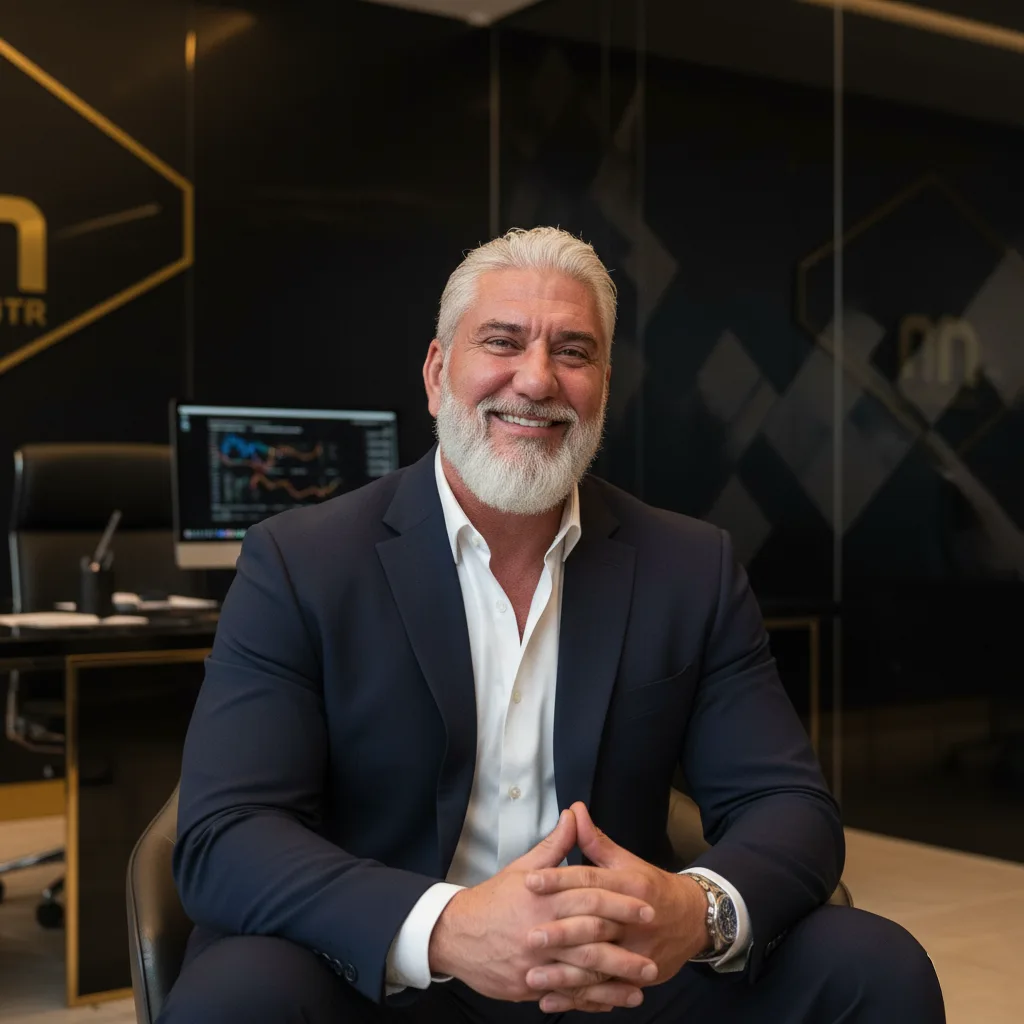
Kaan leads digital strategy at Titan Digital UAE, working with businesses across Dubai, Abu Dhabi, and the Northern Emirates. He has been running Titan Digital since 2008 across Canada, USA, Hong Kong, and the UAE, with a focus on audience psychology, content strategy, and organic search authority.