
The Zero-Click
Search Survival
Guide
How UAE Brands Build Visibility, Trust, and Authority When Google Answers Before Anyone Clicks
Over half of all Google searches now end without a single click to any website. AI Overviews, featured snippets, knowledge panels, and answer boxes have turned the search results page into a destination — not a corridor. If your digital strategy is still built entirely around earning clicks, you are optimising for a behaviour that is rapidly disappearing. This is the guide for what comes next.
This guide by Kaan Bozoglu, Director of Titan Digital Marketing UAE, explains what zero-click search is, why it is accelerating, and how UAE brands can build brand visibility without relying on organic clicks. It covers the mechanics of Google AI Overviews and featured snippets, the role of Answer Engine Optimization (AEO) and Generative Engine Optimization (GEO), structured data implementation, brand entity authority building, content strategy for answer-ready formats, and a practical checklist for UAE marketing teams.
More Than Half of Google Searches End Without a Click
This is not a projection. It is the documented present. Research tracking hundreds of billions of Google searches over multiple years consistently shows that the majority of queries now produce what the industry calls a zero-click result — an answer delivered directly on the search engine results page, before any website is ever visited.
A zero-click result is any SERP outcome where the user's intent is satisfied without leaving Google. This includes: AI Overviews (Google's AI-generated answer summaries at the top of results), featured snippets (the answer box pulled from a single page), knowledge panels (entity information from the Knowledge Graph), People Also Ask boxes, local packs, shopping carousels, and direct answers for calculations, conversions, and definitions.
The rise of AI platforms has compounded the effect. When a user asks ChatGPT, Perplexity, or Google Gemini a question, they receive a synthesised, cited answer — and the majority do not click a single source link. For UAE brands, this creates a fundamental tension: you can rank on page one of Google, be cited by an AI assistant, and still receive zero traffic from that visibility. The question is not whether zero-click search affects you. It is whether you have a strategy for it.
Ranking first on Google used to mean winning the click. Today, it sometimes means providing the free answer. The brands that survive zero-click are the ones that make visibility itself the objective — not the click that follows it.
Kaan Bozoglu, Director — Titan Digital Marketing UAEZero-Click Search Statistics
The Old Playbook Is Broken. Here Is What Broke It.
Traditional SEO was built on a simple model: rank high, earn the click, own the visit. Every metric in the standard analytics stack — organic sessions, bounce rate, time on site, pages per session — assumed the click happened. Zero-click search breaks every link in that chain.
- Success measured in organic sessions
- Click-through rate as the primary ranking signal proxy
- Content optimised to earn the visit, not the impression
- No strategy for SERP features or AI answer inclusion
- Brand awareness assumed to follow from traffic
- Invisible to users who never leave the SERP
- Success measured in SERP feature wins and brand impressions
- Content structured to be extracted as the answer
- Schema markup makes your content machine-readable
- Entity authority signals that AI platforms can cite confidently
- Brand recall built directly at the point of the query
- Visible to users who never click — the majority
This is not an argument for abandoning traditional SEO. It is an argument for expanding beyond it. The brands that will dominate UAE search in 2026 and beyond are building two parallel capabilities simultaneously: the ability to rank, and the ability to be the answer — regardless of whether a click follows.
UAE consumers are among the most digitally fluent in the region, with extremely high smartphone penetration and growing adoption of AI assistants for both Arabic and English-language queries. Sectors including financial services, real estate, hospitality, logistics, and legal advisory are particularly exposed to zero-click displacement — these are exactly the categories where Google answers common queries directly, reducing click opportunity even for first-page results.
How Google and AI Platforms Decide Whose Content Becomes the Answer
Zero-click results are not random. They follow clear selection logic — and understanding that logic is the first step to earning the answer slot instead of watching a competitor fill it.
The brands that appear in AI Overviews and featured snippets are not the ones that paid more. They are the ones whose content was structured to be machine-readable, factually accurate, and directly responsive to the query. Google's selection logic favours content that answers the question in the first sentence, uses clear HTML structure, and is supported by authoritative entity signals across the web.
The Four Mechanisms That Drive Zero-Click Displacement
Seven Strategies for Building Visibility in a Zero-Click World
These are not theoretical responses to an emerging threat. They are the practical approaches we deploy for Titan clients in the UAE right now — across sectors from finance and logistics to hospitality and e-commerce.
Optimise for the Answer Slot, Not Just the Ranking
Ranking in position one is no longer sufficient. The goal is to own the featured snippet or AI Overview citation — which means writing content that answers questions directly, in the first paragraph, in plain language.
The anatomy of a snippet-winning paragraph follows a consistent pattern: state the answer in a single, self-contained sentence of 40–60 words, then provide supporting context. Use the exact question as a heading (H2 or H3). Follow with a concise definition or explanation. Avoid long preambles, throat-clearing introductions, or content that buries the answer below the fold.
Paragraph snippets: 40–60 word answers to definition and explanation queries. List snippets: Ordered or unordered lists for how-to, step-by-step, and ranking queries. Table snippets: Comparison tables for price, specification, or feature queries. Video snippets: YouTube timestamps for procedural queries. For each format, the content must be the most direct and accurate answer available to Google — not the most elaborate.
Implement Schema Markup That Machines Can Read
Structured data is the language that search engines and AI models use to understand what your content is about without relying on inference. For UAE brands pursuing zero-click visibility, Schema.org markup is not optional — it is the infrastructure that makes you eligible for every SERP feature and AI answer citation.
Priority schema types for zero-click eligibility in the UAE market:
Build Brand Entity Authority Across the Web
An entity is a real-world thing — a person, organisation, place, or concept — that Google and AI models can uniquely identify. When your brand is a strong, well-defined entity, AI models can cite it confidently in generated answers. When your entity signals are weak or inconsistent, you are invisible in the answers that matter most.
Entity authority is built through consistency and coverage. Every place your brand is mentioned online — your website, Google Business Profile, LinkedIn, trade directories, press mentions, partner sites — contributes a signal. When those signals agree on the same name, address, phone, service description, and founding story, they reinforce each other. When they conflict, they cancel.
Write for the Question, Not the Keyword
Traditional keyword optimisation targets the words users type. Zero-click optimisation targets the intent behind those words — and delivers a complete, satisfying answer before the user has to look elsewhere. This requires a fundamental shift in how content is planned and written.
The most effective zero-click content strategy in the UAE market starts with question-first content mapping. Instead of building content around keyword clusters, you map every significant question your target audience asks about your service category — including questions they ask that are not directly about your brand. Then you answer each one completely, concisely, and authoritatively.
Step 1: Identify the 30–50 most important questions in your category using Google's People Also Ask, autocomplete, and AI platform query patterns. Step 2: Write a direct 40–60 word answer as the opening paragraph of each content piece. Step 3: Follow with 300–800 words of supporting detail, examples, and UAE-specific context. Step 4: Mark up with FAQPage or HowTo schema. Step 5: Update quarterly as query patterns shift with AI platform evolution.
For UAE brands, this means producing content that answers both the English and the Arabic-language version of queries — not through direct translation, but through culturally and contextually appropriate responses to the same underlying intent. Voice search, which is growing rapidly in UAE Arabic-speaking communities, is almost entirely composed of natural-language questions.
Use AEO and GEO to Win AI Platform Citations
Answer Engine Optimization (AEO) is the practice of structuring your content so that AI assistants can confidently extract and present it as an answer. Generative Engine Optimization (GEO) is the practice of building the brand entity signals that AI models use to decide whether and how to mention your brand. Together, they are the zero-click strategy for the AI platform layer of search.
When a UAE business owner asks ChatGPT "what are the best digital marketing agencies in Ras Al Khaimah?", ChatGPT constructs an answer from its training data, real-time web access, and entity signals. Brands that appear in that answer did not pay for the placement. They earned it — through content depth, entity consistency, and structured signals that AI models can trust.
The question for every UAE brand is not just "can Google find my website?" It is "can ChatGPT describe my business accurately when a customer asks?" If the answer to the second question is no — or worse, if ChatGPT gives wrong information about you — that is an AEO and GEO problem, and it costs you invisibly every day.
Kaan Bozoglu — Titan Digital Marketing UAEDiversify Traffic to Owned Channels
Zero-click search reduces dependence on the organic click as a traffic mechanism. The response is not to chase every click harder — it is to build audience relationships through channels you own and control, so that the SERP impression converts to brand recall, and brand recall converts to direct intent.
In the UAE context, WhatsApp is the highest-converting owned channel for SMEs. An audience that has added your WhatsApp contact or opted into your broadcast list is reachable without depending on Google at all. Email newsletters, LinkedIn communities, podcast audiences, and YouTube subscribers serve the same function — they represent the audience that has already moved past the zero-click stage and chosen a relationship with your brand.
UAE brands that derive 80%+ of their new business enquiries from organic search are the most exposed to zero-click displacement. If Google changes how it displays results in your category — or an AI platform starts answering your core queries — your pipeline can drop without any change to your rankings. Owned channel diversification is the hedge against SERP dependency, not a nice-to-have.
Measure What Actually Matters Now
If your reporting still only tracks organic sessions and keyword rankings, you are measuring the output of a strategy that zero-click is eroding — and making decisions with incomplete data. Expanding the measurement framework is not optional; it is the only way to know whether your zero-click strategy is working.
The Services Behind a Zero-Click Visibility Strategy
Zero-Click Search: Direct Answers
What is zero-click search?
How does zero-click search affect UAE businesses specifically?
What is the difference between AEO and GEO in a zero-click context?
Can a UAE business survive and grow in a zero-click environment?
What content formats perform best for featured snippets and AI Overviews?
Does Schema.org markup actually help with zero-click visibility?
How should UAE brands measure zero-click search performance?
Is zero-click search a threat or an opportunity for UAE brands?
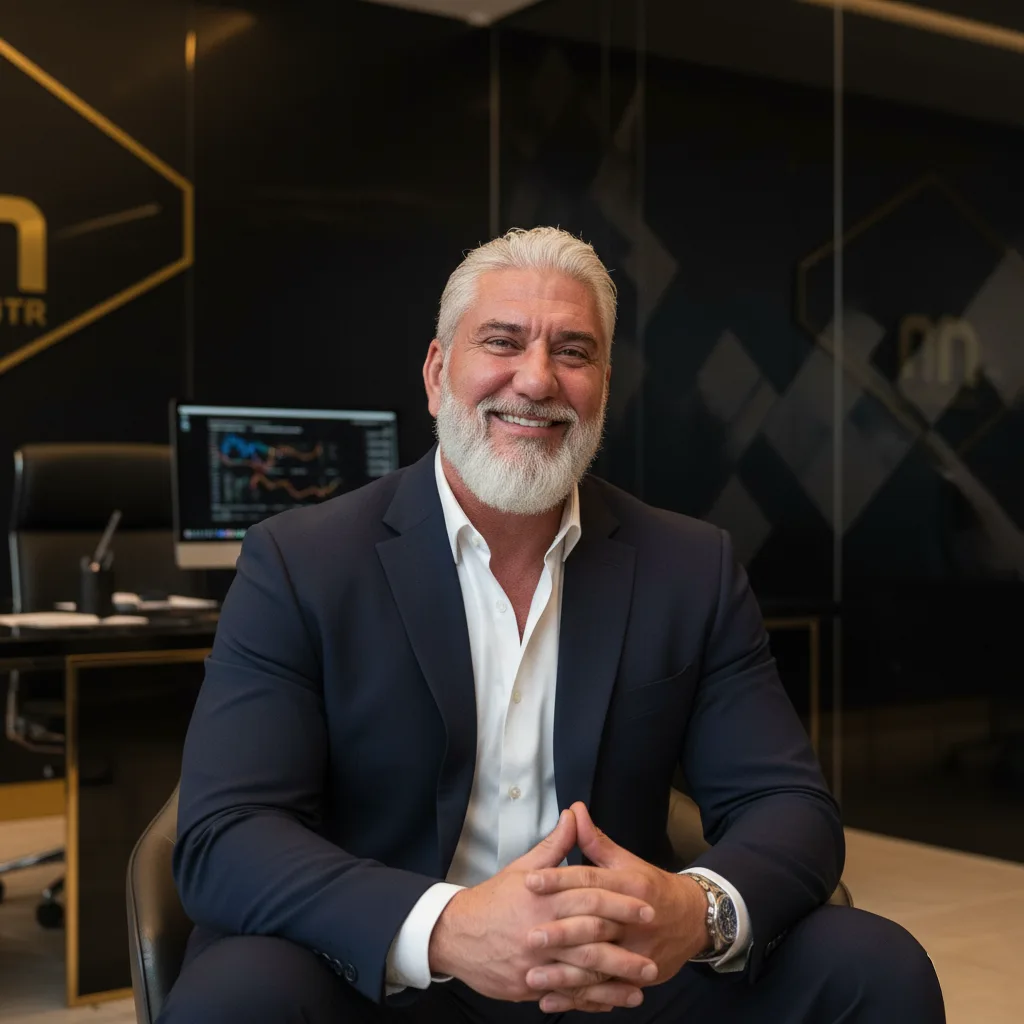
Kaan Bozoglu
Director, Titan Digital Marketing UAE — Innovation City, Ras Al Khaimah
Kaan Bozoglu is the founder and director of Titan Digital Marketing UAE, based at Innovation City, Ras Al Khaimah. With 25+ years of international marketing experience across the UAE, Canada, USA, and Hong Kong, he has guided brands through every major search transition — from keyword-first SEO to AI-era answer engine and generative search strategy. He writes about zero-click search, AEO, GEO, and digital visibility for UAE businesses navigating the AI search shift.
Your Customers Are Getting Answers
Without Visiting Your Site.
Let's Change That.
We audit your SERP feature eligibility, AI platform citation accuracy, entity authority gaps, and structured data implementation across your entire site — and build the AEO, GEO, and content strategy that puts your brand in the answers your customers are already receiving. Free audit, 48 hours.
Answer Engine Optimization · Generative Engine Optimization · Featured Snippets · AI Overviews · UAE-Based Team